I can get a lot done in a day.
Research one subject. Jump into a meeting. Go back to a document. Answer a message. Move to the next problem.
A few hours later, I have touched ten different things.
That looks productive.
Sometimes it is.
Sometimes it is just movement.
Lately, I have been asking myself a different question.
Not:
How much did I get today?
But:
What did I get done today?
There is a difference.
A big one.
Finishing a task can mean nothing more than removing it from a list.
Thinking about the right problem for another hour can create more value than closing five smaller ones.
That does not make speed the problem.
Speed is an advantage.
If you can understand quickly, decide quickly and execute quickly, you should use it.
But speed has one condition:
You still need to know where you are going.
The moment speed becomes the objective, judgement starts to disappear.
You want to finish the research quickly.
Reply to the email immediately.
Push the project forward.
Close the task.
Move on.
And without noticing it, the standard changes.
You stop asking:
“Is this good?”
You start asking
“Is this done?”
That is where moving fast turns into rushing.
Both are fast.
Both create activity.
Both make the day look busy.
But there is one important difference.
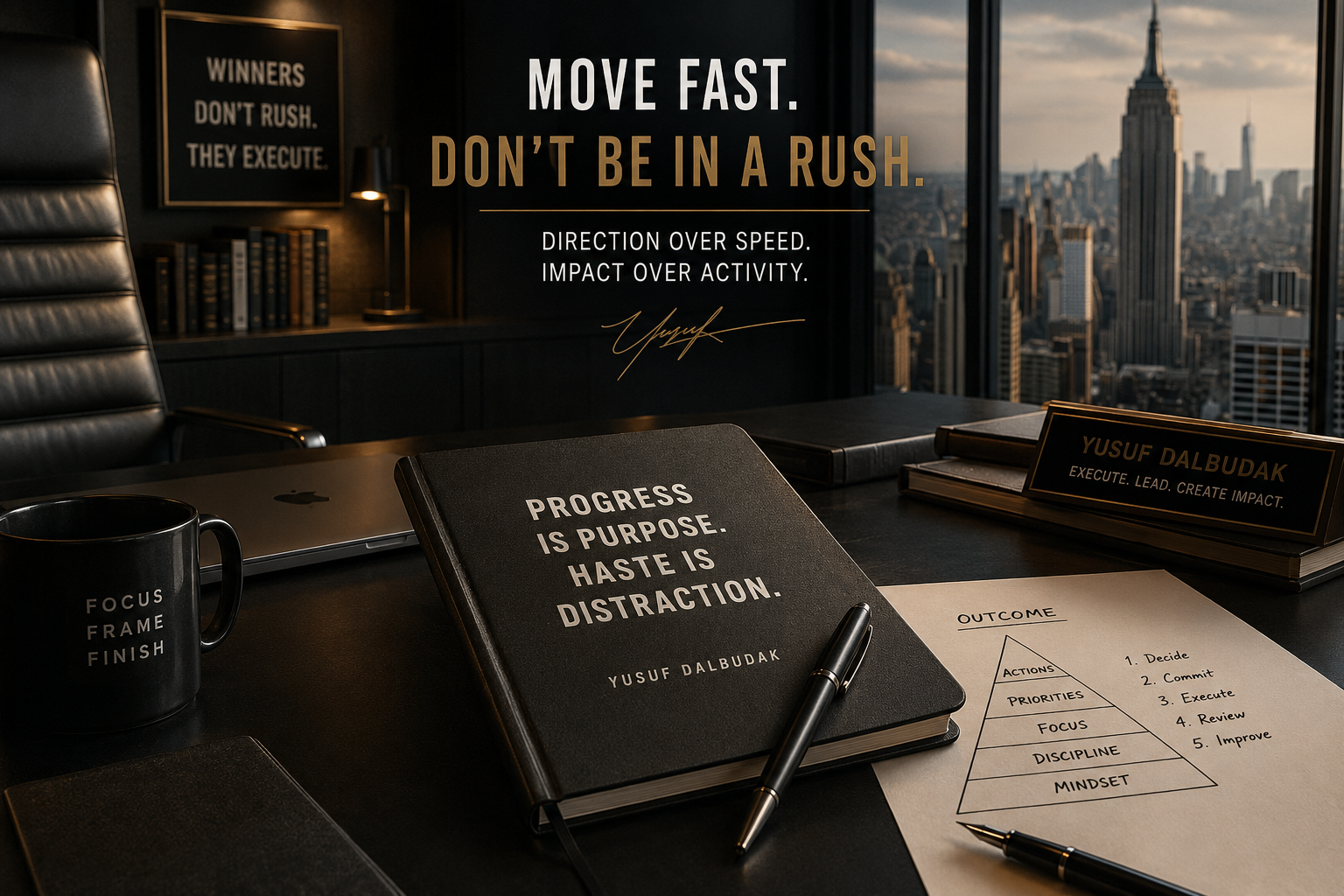
When you move fast, direction comes first.
When you rush, movement comes first.
That distinction matters more to me now because the real cost of handling many different subjects in one day is not always time.
It is attention.
And attention is not something every task deserves equally.
Some things should take five minutes.
Some deserve thirty.
Some questions should stay open for a few days before you decide what you really think.
The skill is not treating every task the same.
It is knowing which decisions deserve speed and which deserve depth.
Maybe that is what productivity actually is.
Not doing everything faster.
Not filling every hour.
Not clearing the longest possible list.
It is being able to decide where speed creates an advantage — and where slowing down protects the outcome.
Speed is useful.
Direction is decisive.